

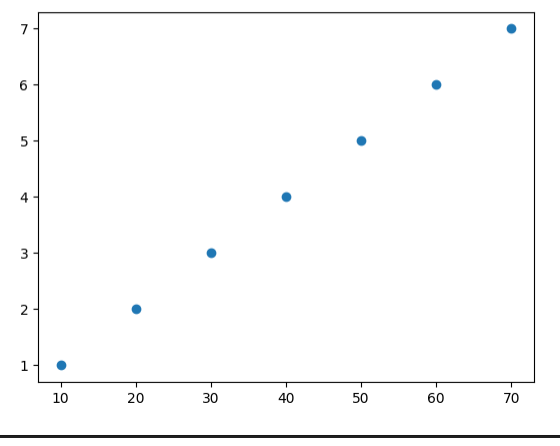
Correlation, Causation, and Regression: Clearing the Fog for Smart Decision Making
Every day, data analysts, marketers, product managers, and business leaders stare at charts and numbers. They see two lines moving together. They feel a spark of insight. But then comes the dangerous leap: assuming that because two things move together, one must be causing the other.
This confusion between correlation, causation, and regression is not just an academic nuisance. It is a practical trap that has led to failed product launches, wasted marketing budgets, and misguided business strategies.
At TuxAcademy, we believe in building clarity. In this guide, we will walk through what each of these concepts truly means, how they differ, and why understanding the gap between them can save you from costly mistakes.
Causation vs Regression vs Correlation
Difference between correlation , causation and regression is a topic
of confusion among many new learners. This post is aimed to clarifying
these concepts.
Correlation is used to find the relationship between two metric and
ordinal variables, say weight and height.
It only determines whether two variables move together. It says
“When x moves up, y also moves up. “
“When x moves up , y moves down”, or
“when x moves down, y moves up.”
It just determines whether both the variables move together and in
which direction; in the opposite direction or in the same direction.
Correlation does not specify whether one variable has an effect on
another variable. It does not say that x has a direct influence on y or
that y has a direct influence on x. It only specifies that two variable are
correlated.
Take few examples,
Taller people tend to weigh more. This implies that height and
weight increase together.
People with higher education tend to have higher salaries. We
can say that education level and salary will increase together.
Iccreaem sale increases with increase in temperature .
Studying more will get good scores. Time spent in study is
associated with increase in score.
High exercise will cause decrease in body weight. Here, when
there is increase in exercise , body weight goes down.
Drug A reduces stress.
All the above examples infer the correlation between the two variables.
When one variable increases, another variable also moves. It just
concludes that both are correlated. We still don’t know what caused this
correlation. Why they are associated is still unknown, and this can be
established only via causation.
Causation means establishing cause and effect relationship. It implies,
finding the answer of the below question:
“do one variable really influences the other and in what
direction” .
For example, “does increase in temperature really cause increase in
icecream sales.” Vice-versa relation is not possible. Meaning, ice cream
sales can not make rise in temperature. Here we infered the causal
relationship that “temperature impact icecream sale. “
There might also be a third factor influencing both variables. For
instance, the rise in ice cream sales with increasing temperature could be
due to ongoing vacations and increased outdoor activity. In this case, the
third variable — vacation time — and even a fourth variable — people’s
increased outdoor activity — may be indirectly affecting ice cream sales.
Thus, temperature do not directly impacting icecream sales.
Causation specifies whether one factor has a direct influence on another
factor , keeping confounding factors constant.
To establish causation, below conditions must be met:
1.there must be a correlation between variable x and variable y.
2.there must be a temporal sequence between variable x and
variable y. For example, studying more will occur before getting good
results. Such a time sequence must exist as a necessary condition for
causation.
3.Scientific experiments like RCTs and within-subject designs must
be done by controlling confounding factors . For example, in withinsubject design , we can conduct multiple experiments on the same
group of participants — for example, measuring ice cream
consumption at different temperatures in the same people — we can
study how increased temperature influences ice cream intake while
keeping individual differences constant. Similarly, an RCT might be
conducted by randomly assigning participants to a treatment or
control group to test a drug’s effect on stress level.
If rigorous studies have been conducted and we receive strong evidence
of correlation meeting the above conditions, then causation can be
inferred. If evidence is insufficient, then we can not conclude that
variable x causes variable y, though further research may be needed.
Regression is just a way to model or quantify the relationship
identified during correlation. It determines how variable x influences
variable y, assuming both are metric variables. Take an example,
“ how much icecream sale is increased when temperature rises by one
degree. “
“ how much body weight is reduced on an increase in exercise time”
Before making regresison analysis, we must determine the direction of
the relationship between the two variables , specifying which is
dependent variable and which is independent variable. If causation has
been established properly, we have it already for the problem in hand. In
this case, regression analysis can quantify the relationship, providing
our model is correct and other conditions are met. If causation has not
been established, we presume the direction of the relationship using a
theory or logic before starting regression. We have to presume whether
variable x influences variable y or it is other way around. In this case,
regression results only show associations and does not prove any
causation here. Further evidence is needed to make causal
interpretations.
Regression quantifies the strength and direction of association
between variable x and variable y or how well we can interpret
variable y using variable x, it does not tell us whether variable x directly
impacts variable y. For example, if we use regression to show increase in
exam score with an increase in time spent studying, it does not prove
that more time spent in studies causes higher exam scores . There can be
other confounding factor like , students’s ability and IQ level involved.
Thus, regression can not determine the cause-and-effect relationship.
However, when causation is established through rigorous methods,
regression can quantify the causal relationship, assuming model is
correct and all other assumptions are met.
Wrapping up, correlation specifies the relationship and its strength
among two variables. Correlation does not mean that one variable has a
direct influence on other. We must perform causation using rigorous
scientific test. If you are making decisions based on regression, you must
think of causation when interpreting the regression result. Otherwise
you may end up making wrong decisions, leading to business loss.
Putting It All Together – A Practical Framework
Let us step back and see how these three concepts fit together in a real workflow.
Step One: Explore with Correlation
You start with exploration. You have a business problem. You want to understand what factors might be related to your key metric. You calculate correlations between your dependent variable and potential predictors. You find that several variables move together.
At this stage, you have only discovered associations. You do not know why they exist. You do not know which direction the influence runs. You do not know if there are confounders.
Step Two: Hypothesize Causation
Based on domain knowledge and temporal logic, you form a hypothesis. You suspect that X might cause Y. You also list potential confounders. For example, you suspect that more customer support calls might cause higher customer satisfaction. But you also know that product quality could be a confounder.
Step Three: Test Causality
If possible, you design a causal study. You run an A/B test. You randomly assign customers to different support experiences. You measure satisfaction afterward. If the randomized experiment shows a significant difference, you have evidence for causation.
In many business contexts, randomized experiments are not feasible. You cannot randomly assign some customers to a higher price just to see if demand drops. In such cases, you must rely on quasi experimental methods or simply acknowledge that your regression results are only associative.
Step Four: Quantify with Regression
Only after establishing causation, or at least clearly stating the assumption of causality, do you use regression to quantify the effect. You build a model that estimates the size of the impact. You use that model to make predictions or to simulate business scenarios.
If you have not established causation, you still can use regression for prediction. Predicting customer churn does not require knowing what causes churn. It only requires finding variables that are reliably associated. But for decision making, prediction is not enough. You need to know that changing X will change Y.
Common Pitfalls and Real Business Consequences
The confusion between correlation, causation, and regression has real costs. Let us look at a few examples.
The Marketing Budget Mistake
A company runs a regression showing that higher social media ad spend is associated with higher sales. The marketing director concludes that increasing ad spend will cause higher sales. They double the budget. Sales do not increase. Why?
The original correlation existed because the company only increased ad spend during peak shopping seasons. Sales were high because of seasonal demand, not because of the ads. The regression did not control for seasonality. The director mistook correlation for causation.
The Product Feature Trap
A product team analyzes user data. They find a correlation between using a certain feature and higher retention. They assume the feature causes retention. They push all users to adopt the feature. Retention does not improve.
What happened? More engaged users were already more likely to use the feature. The feature did not cause engagement. Engagement caused feature use. The team confused the direction of influence.
The Salary Regression Error
An HR analyst runs a regression showing that employees with more years of education earn higher salaries. They recommend that the company require a master’s degree for all mid level roles. Salaries do not increase for existing employees. Turnover rises.
The regression did not account for ability, industry experience, or negotiation skills. Education was correlated with these other factors, but not causing higher pay on its own.
These examples are not hypothetical. They happen every day in companies around the world.
A Decision Checklist for Practitioners
Before you make a business decision based on data, ask yourself these questions.
First, have I established correlation? If not, stop. There is no relationship to discuss.
Second, is there a temporal sequence? Does the suspected cause happen before the effect? If not, you cannot claim causation.
Third, have I ruled out confounding variables? Have I run a randomized experiment or used a quasi experimental design? If not, your regression results are only associative.
Fourth, am I using regression to predict or to decide? For prediction, correlation is enough. For deciding to change a variable, you need causation.
Fifth, have I clearly communicated the limitations to stakeholders? Do not use causal language like drives, leads to, or impacts unless you have causal evidence. Use careful language like is associated with or predicts.
Following this checklist will protect you from the most common and costly mistakes.
Learning More with TuxAcademy
Understanding correlation, causation, and regression is not just about passing a statistics exam. It is about becoming a trustworthy data professional. It is about making decisions that actually work.
At TuxAcademy, we offer courses that take you from confused beginner to confident practitioner. You will learn not just the formulas, but the intuition. You will practice with real datasets. You will work through case studies where mistaking correlation for causation leads to failure.
Our approach is human centric. We do not throw equations at you without context. We explain why each concept matters for your actual work. We show you the mistakes that real companies have made and how to avoid them.
Whether you are a business analyst, a data scientist, a marketer, or a manager, mastering these fundamentals will set you apart. You will be the person who asks the right questions. You will be the person who saves the team from chasing false signals.
Correlation discovers relationships. Regression quantifies them. Causation confirms them. Each has its place. Each is powerful when used correctly and dangerous when misunderstood.
Do not fall into the trap of assuming that because two things move together, one causes the other. Do not believe that running a regression gives you a license to make causal claims. Do not make business decisions based on associations alone.
Instead, be curious. Ask why. Test your assumptions. Use experiments when possible. And always, always communicate with honesty about what your data can and cannot say.
That is the path to becoming a truly data driven professional. That is the path TuxAcademy is here to support.
Ready to go deeper? Explore our course catalog at TuxAcademy.org and start building skills that actually matter.
Nearby Landmarks & Localities for TuxAcademy (Greater Noida West) Offline Courses:
TuxAcademy is strategically located in the heart of Greater Noida West, making it easily accessible from several prominent residential hubs and landmarks. We are close to Gaur City, one of the largest residential townships in the region, and well-connected to Noida Extension. Our center is also conveniently accessible from Bisrakh and Techzone 4, making it ideal for students from nearby sectors. We are located near the popular Ek Murti Chowk, a key junction that connects multiple sectors and ensures smooth commuting. Additionally, students from Sector 1 Greater Noida West, Sector 16B Greater Noida West, and Crossings Republik can easily reach us. This prime location makes TuxAcademy a convenient choice for learners across Greater Noida West and nearby areas.
Resources:
To deepen your understanding and explore more career-focused programs, you can visit the following pages:
- https://www.tuxacademy.org/
- https://www.tuxacademy.org/artificial-intelligence-course
- https://www.tuxacademy.org/data-science-course
- https://www.tuxacademy.org/cybersecurity-course
- https://www.tuxacademy.org/full-stack-development-course
- https://www.tuxacademy.org/blog
These resources will help you move from learning concepts to building a successful career.