

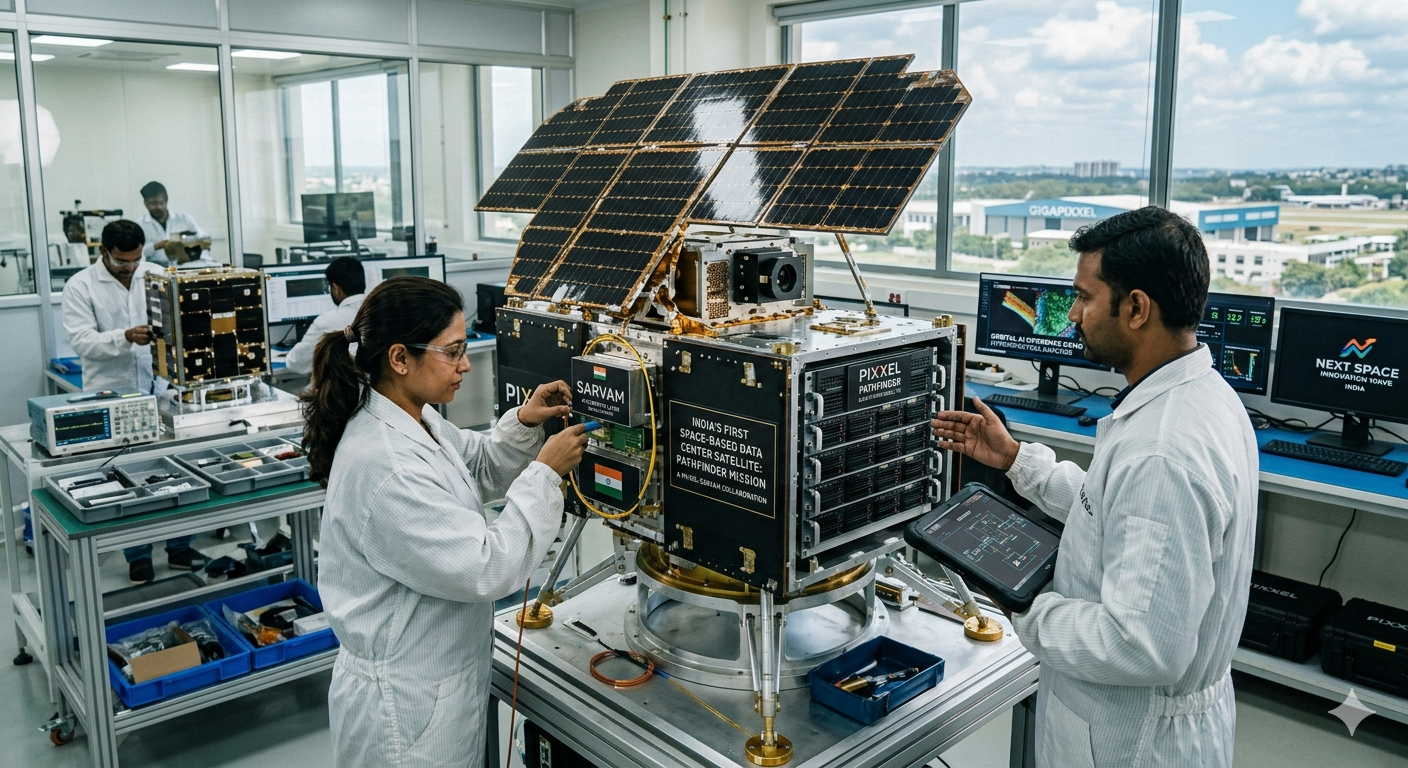
A New Era of Space and Data Convergence
India is entering a transformative phase in technological innovation. From digital payments to AI-led governance, the country has consistently demonstrated its ability to leapfrog traditional infrastructure limitations. Now, a groundbreaking collaboration between Pixxel and Sarvam is pushing the boundaries even further—into space.
The announcement of India’s first space-based data center satellite is not just another milestone in space exploration. It represents a paradigm shift in how computing infrastructure is conceptualized, deployed, and scaled. This initiative blends space technology with cloud computing, artificial intelligence, and edge computing to create a futuristic digital backbone.
For students, professionals, and institutions like TuxAcademy, this innovation signals a massive opportunity to align skills with emerging global technology trends.
What Is a Space-Based Data Center Satellite
A space-based data center satellite is essentially a computing infrastructure deployed in orbit rather than on Earth. Unlike traditional data centers that require land, cooling systems, and massive energy resources, these satellites leverage the natural environment of space.
Key Features
- Operates in low Earth orbit or higher orbital paths
- Uses solar energy as a primary power source
- Offers ultra-low latency for specific applications
- Enables real-time data processing closer to data sources
- Reduces dependency on terrestrial infrastructure
Why This Matters
Traditional data centers face challenges such as:
- High energy consumption
- Cooling costs
- Land usage limitations
- Environmental impact
A space-based solution addresses many of these issues while unlocking new capabilities in global connectivity and processing.
The Vision Behind Pixxel and Sarvam Collaboration
Pixxel’s Role
Pixxel has already made headlines for its hyperspectral imaging satellites, providing detailed Earth observation data. Their expertise in satellite manufacturing, deployment, and operations forms the backbone of this initiative.
Sarvam’s Role
Sarvam brings AI infrastructure and data processing capabilities. Their role focuses on:
- AI model hosting
- Distributed computing
- Data analytics platforms
- Language AI and Indian data ecosystems
Combined Vision
Together, they aim to:
- Build scalable space computing infrastructure
- Enable AI processing directly in orbit
- Reduce data transmission delays
- Enhance national technological sovereignty
How Space-Based Data Centers Work
Step-by-Step Process
- Data Collection
Satellites gather massive amounts of data from Earth, sensors, and communication networks. - On-Orbit Processing
Instead of sending raw data back to Earth, the satellite processes it in space. - AI Integration
Machine learning models analyze data in real time. - Transmission of Insights
Only processed insights are transmitted back, saving bandwidth and time.
Industry Insights: Why This Innovation Is Critical
1. Explosion of Data
The world is generating unprecedented volumes of data. By 2030, global data is expected to exceed 175 zettabytes.
2. Rise of AI and Edge Computing
AI requires high-performance computing. Space-based infrastructure can:
- Reduce latency
- Enable faster decision-making
- Support autonomous systems
3. Sustainability Concerns
Traditional data centers consume massive electricity. Space-based systems use solar energy, reducing carbon footprints.
4. Strategic Advantage
Countries investing in space computing gain:
- Defense superiority
- Data sovereignty
- Technological leadership
Case Study 1: Hyperspectral Imaging Meets AI
Pixxel’s hyperspectral satellites already capture detailed environmental data.
Problem
Processing large volumes of satellite data on Earth causes delays.
Solution
With space-based data centers:
- Data is processed in orbit
- AI detects patterns instantly
- Faster response for disasters, agriculture, and climate monitoring
Outcome
- Reduced latency
- Real-time insights
- Improved decision-making
Case Study 2: Disaster Management and Early Warning Systems
Scenario
Floods or earthquakes require immediate response.
Traditional Approach
- Data sent to Earth
- Processed in ground data centers
- Delayed alerts
Space-Based Approach
- Real-time AI processing in orbit
- Instant alerts to authorities
- Faster evacuation and response
Impact
- Lives saved
- Reduced damage
- Efficient emergency management
Case Study 3: Secure Data Infrastructure for Governments
Challenge
Sensitive data stored in terrestrial data centers is vulnerable to:
- Cyberattacks
- Physical threats
- Infrastructure failures
Solution
Space-based data centers offer:
- Isolation from physical attacks
- Advanced encryption
- Secure communication channels
Result
- Enhanced national security
- Reduced cyber risk
Impact on Key Industries
1. Artificial Intelligence
- Faster training of AI models
- Real-time inference
- Edge AI capabilities
2. Cloud Computing
- Hybrid cloud models (space + earth)
- Reduced latency
- Global accessibility
3. Cybersecurity
- More secure infrastructure
- Reduced attack surface
- Encrypted satellite communications
4. Telecommunications
- Improved network coverage
- Enhanced satellite internet
- 5G and future 6G integration
Opportunities for Students and Professionals
This innovation opens new career pathways, especially for learners at TuxAcademy.
High-Demand Skills
- Artificial Intelligence and Machine Learning
- Cloud Computing and DevOps
- Cybersecurity
- Satellite Data Analytics
- Edge Computing
Job Roles
- Space Data Engineer
- AI Infrastructure Engineer
- Satellite Systems Analyst
- Cloud Architect
- Cybersecurity Specialist
Opportunities in India
Cities like:
- Noida
- Greater Noida
- Delhi NCR
- Bengaluru
- Hyderabad
- Pune
are emerging as tech hubs for AI, cloud, and space-tech innovation.
For learners you can search:
- AI course near me in Greater Noida
- Data science institute in Noida
- Cybersecurity training in Delhi NCR
- Cloud computing course near me
TuxAcademy is strategically positioned to bridge the skill gap.
Role of TuxAcademy in This Technological Shift
TuxAcademy is aligned with future technologies that this innovation represents.
Programs Offered
- Artificial Intelligence and Machine Learning
- Data Science and Analytics
- Cybersecurity
- Full Stack Development
- Cloud and DevOps
- Blockchain Technology
Key Advantages
- Industry-aligned curriculum
- Hands-on projects
- Internship opportunities
- Placement support
Challenges in Building Space-Based Data Centers
1. High Initial Costs
Launching satellites and infrastructure requires significant investment.
2. Technical Complexity
- Radiation-resistant hardware
- Thermal management
- Reliable communication systems
3. Regulatory Framework
Space laws and international regulations need to evolve.
4. Data Privacy
Ensuring compliance with global data protection laws.
Future Trends: What Lies Ahead
1. Space Cloud Computing
Companies may offer “space cloud” services similar to AWS or Azure.
2. AI in Orbit
AI models running directly in satellites.
3. Global Connectivity
Seamless internet coverage worldwide.
4. Autonomous Systems
Self-operating satellites with minimal human intervention.
India’s Position in the Global Space-Tech Race
India has already established itself through:
- Cost-effective satellite launches
- Strong space research ecosystem
- Growing private space sector
This new initiative positions India as a leader in:
- Space computing
- AI infrastructure
- Digital innovation
Why This Matters for the Next Generation
Students entering the tech industry today will work in a world where:
- Computing is not limited to Earth
- AI operates in real-time globally
- Data is processed closer to its source
This demands a shift in learning from traditional IT skills to advanced, interdisciplinary expertise.
Action Plan for Aspiring Tech Professionals
Step 1
Build a strong foundation in programming languages such as Python and Java.
Step 2
Learn AI and machine learning concepts.
Step 3
Gain expertise in cloud platforms and DevOps.
Step 4
Understand cybersecurity fundamentals.
Step 5
Work on real-world projects and internships.
A Giant Leap Toward the Future
The collaboration between Pixxel and Sarvam is more than a technological achievement – it is a vision of the future.
India’s first space-based data center satellite marks the beginning of a new digital era where computing transcends physical boundaries. It creates opportunities for innovation, career growth, and global leadership.
For institutions like TuxAcademy, this is a defining moment to prepare students for next-generation careers. For learners, it is an invitation to step into the future of technology.
Resources:
To deepen your understanding and explore more career-focused programs, you can visit the following pages:
- https://www.tuxacademy.org/
- https://www.tuxacademy.org/artificial-intelligence-course
- https://www.tuxacademy.org/data-science-course
- https://www.tuxacademy.org/cybersecurity-course
- https://www.tuxacademy.org/full-stack-development-course
- https://www.tuxacademy.org/blog
These resources will help you move from learning concepts to building a successful career.
Ready to build your career contact:
TuxAcademy
Website: https://www.tuxacademy.org/
Address: SA209, 2nd Floor, Town Central, Ek Murti, Greater Noida West – 201009
Contact: +91-7982029314
Email: info@tuxacademy.org
Join TuxAcademy: Register at TuxAcademy – Enroll Now for Tech Courses and Internship
Artificial Intelligence Course in Noida
Cyber Security Course in Noida
Full Stack Developer Course in Noida
Artificial Intelligence Course in Mumbai